Back to Special Relativity
Contents
- 1800s Ether Hypothesis
- 1865 Maxwell’s Electromagnetism
- 1887 Michelson-Morley Experiment
- 1889 Contraction Hypothesis
- 1904 Lorentz Transformations
- 1905 Annus Mirabilis
- 1905 Einstein Special Relativity
- 1908 Minkowski’s Theory of Spacetime
1800s Ether Hypothesis
- Many prominent scientists of the 19th century (Maxwell, Lorentz, FitzGerald, Lord Kelvin, Heaviside, Fresnel, Stokes, Poincaré) subscribed to the hypothesis that a weightless, transparent substance, called the “ether,” permeated all matter and space and was the medium for transmitting light and other electromagnetic waves.
- Two arguments for the existence of the ether:
- If there are waves there must be something waving. So, electromagnetic waves require a medium of some kind, just as sound waves require a medium such as air or water.
- Velocity is relative. An airplane’s ground speed, for example, is relative to the Earth’s surface below; its airspeed is relative to the air around it. Therefore the velocity of light is relative to something: the ether.

- Thus, Maxwell and others believed that electromagnetic waves propagate through the ether at the speed of light and that the speed of light is therefore relative to the ether.
1865 Maxwell’s Electromagnetism
- Electromagnetism is the theory of the electromagnetic force, governing electricity and magnetism.
- Maxwell derived from the postulates of his theory that electrical and magnetic fields can generate each other, producing waves propagating at the speed of light.
- Maxwell thus conjectured that:
- Light is an electromagnetic wave.
- Electromagnetic waves propagate through the ether.
- Therefore, the speed of light is relative to the ether.
1887 Michelson-Morley Experiment
- If the Ether Hypothesis is correct:
- The speed of light is relative to the ether.
- The Earth moves through the ether.
- Therefore, measurements of the speed of light on Earth should vary with the direction of the measured light rays.
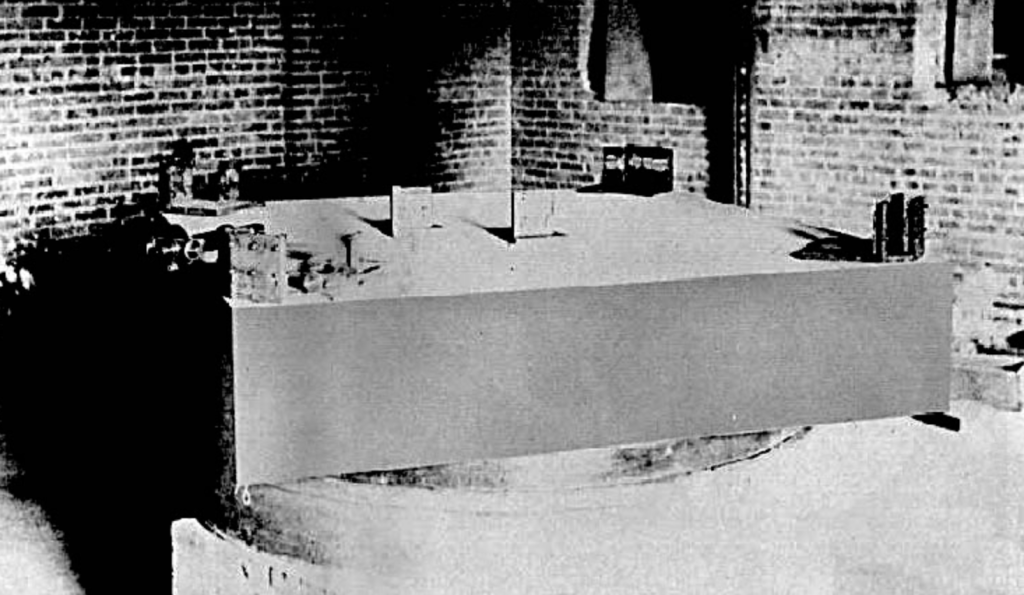
- In their classic experiment, Michelson and Morley showed that the speed of light on Earth is the same regardless of the direction of the measured light rays.
- Therefore, it appears, there is no ether.
1889 Contraction Hypothesis
- It would seem that the Michelson-Morley Experiment refuted the Ether Hypothesis:
- According to the Ether Hypothesis the speed of light varies with an observer’s motion through the either.
- But the speed of light was observed to be the same, regardless of the motion of sender and receiver.
- Hendrik Lorentz and George Francis FitzGerald independently proposed a way to reconcile these theses: moving through the ether makes measuring instruments shorter, so that the observed speed of light is always the same.
1904 Lorentz Transformations
- Hendrik Lorentz set for the Lorentz Transformations based on the Contraction Hypothesis.
1905 Annus Mirabilis
In 1905 Einstein was 26, working at the patent office in Bern, Switzerland

- During the year he published four landmark papers that:
- Explained the photoelectric effect by postulating that light travels in tiny packets called photons.
- Offered the first experimental proof that atoms exist, by invoking the atomic theory to explain Brownian motion.
- Set forth the theory of Special Relativity.
- Zur Elektrodynamik bewegter Körper
- On the Electrodynamics of Moving Bodies
- Zur Elektrodynamik bewegter Körper
- Derived E = mc2
- Ist die Trägheit eines Körpers von seinem Energieinhalt abhängig?
- Does the Inertia of a Body Depend upon its Energy Content?
- Ist die Trägheit eines Körpers von seinem Energieinhalt abhängig?
1905 Einstein Special Relativity
- Einstein set forth Special Relativity in his 1905 paper “Zur Elektrodynamik bewegter Körper” (“On the Electrodynamics of Moving Bodies”).
- Here’s way a way of putting the paper in historical context.
- The following four propositions are logically incompatible:
- Principle of Relativity
- The laws of physics are true in all inertial reference frames.
- Galilean Addition of Velocities
- If an object (or particle or whatever) moves with velocity u′ in frame S′ in a given direction and frame S′ moves with velocity v in the same direction relative to frame S, then the object moves with velocity u = u′ + v in frame S in that direction.
- The laws of Electromagnetism logically imply that the speed of light = c.
- The laws of Electromagnetism are laws of physics.
- Principle of Relativity
- The propositions can’t all be true because:
- If (a) the laws of Electromagnetism are laws of physics and (b) the laws of physics are true in all inertial reference frames and (c) the laws of Electromagnetism imply that the speed of light = c, then the speed of light = c in all inertial frames. But that contradicts the Galilean Addition of Velocities: If a light beam moves at velocity c in frame S′ and frame S′ moves at 100 meters per second in the same direction relative to frame S, then the light beam moves at c + 100 m/s in frame S. But that means the speed of light does not equal c in all inertial frames.
- So at least one of the propositions is false.
- Most physicists of the day rejected the Principle of Relativity on the grounds that the laws of Electromagnetism are true only in the frame of the ether.
- Einstein, however, rejected the Galilean Addition of Velocities on the grounds that the laws of physics are true in all inertial frames and the laws of Electromagnetism are laws of physics.
- Special Relativity thus has two postulates:
- Principle of Relativity
- The speed of light = c in all inertial reference frames.
- From which Einstein derived counterintuitive predictions:
- Relativity of Simultaneity
- Time Dilation
- Length Contraction.
- Later in the year he derived E = mc2.
- Special Relativity has been overwhelmingly confirmed and is accepted today as established fact. Physicists see SR in action in cosmic rays and particle accelerators.
1908 Minkowski’s Theory of Spacetime
Hermann Minkowski, Einstein’s former mathematics professor, recognized that Special Relativity undermined the concepts of space and time of Classical Mechanics. In 1908 he set forth the theory of four-dimensional spacetime based on Einstein’s ideas.

- Raum und Zeit, a lecture Minkowski gave in 1908, begins:
- “The views of space and time which I wish to lay before you have sprung from the soil of experimental physics, and therein lies their strength. They are radical. Henceforth, space by itself, and time by itself, are doomed to fade away into mere shadows, and only a kind of union of the two will preserve an independent reality.”
- Einstein initially regarded Minkowski’s theory as a mere mathematical game, but wound up using it as the basis for his theory of gravity, General Relativity.
- Minkowski died in 1909 at age 44.
 A Philosopher's View