Back to Plate Tectonics
Contents
- Continents Fitting Together
- Deep Sea Trenches
- Earthquakes
- Island Arcs
- Mountains
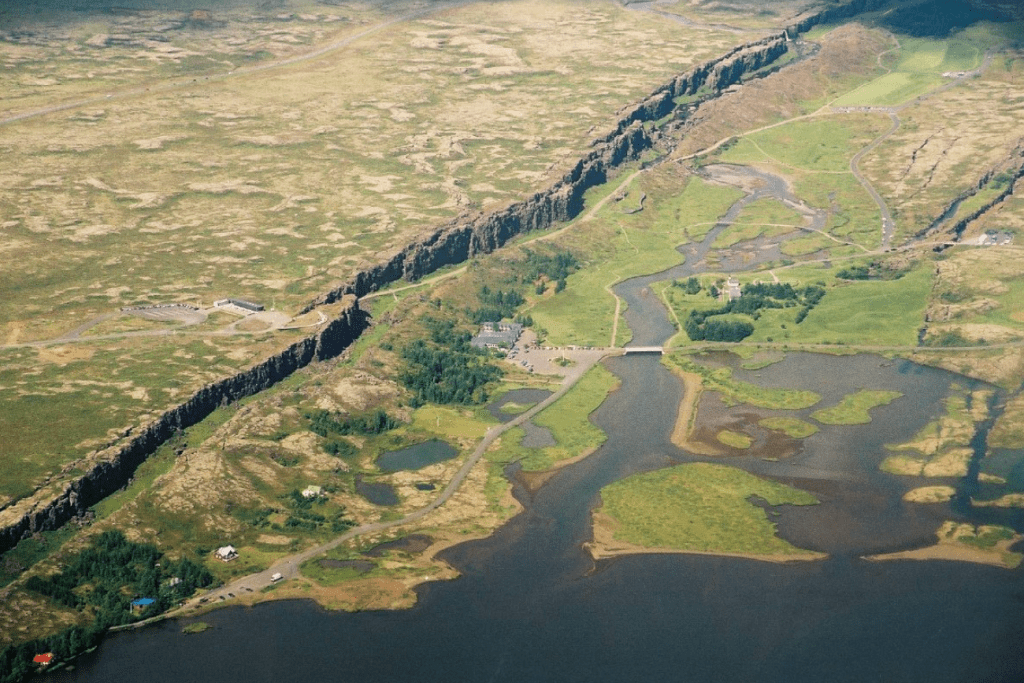
- Oceanic Ridges and Seafloor Spreading
- Transform Faults
- Volcanoes
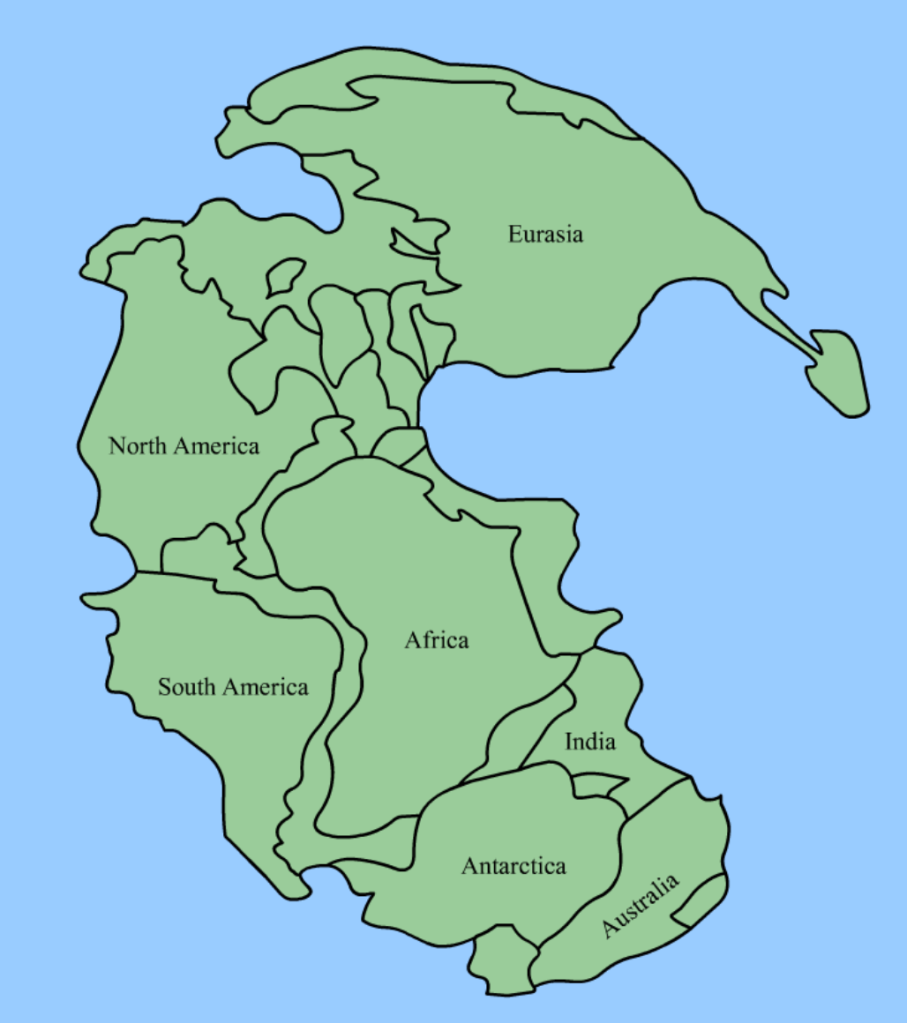
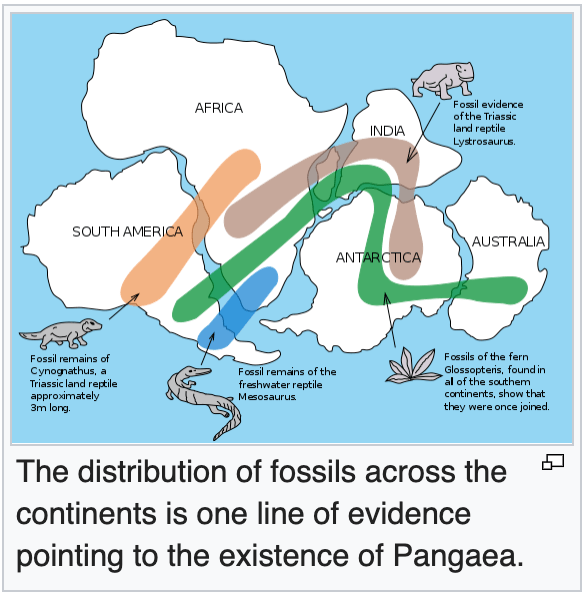
Continents Fitting Together
Pangea, Continental Drift
emvc.geol.ucsb.edu/2_infopgs/IP1GTect/aPangeaAnim.html
Deep Sea Trenches
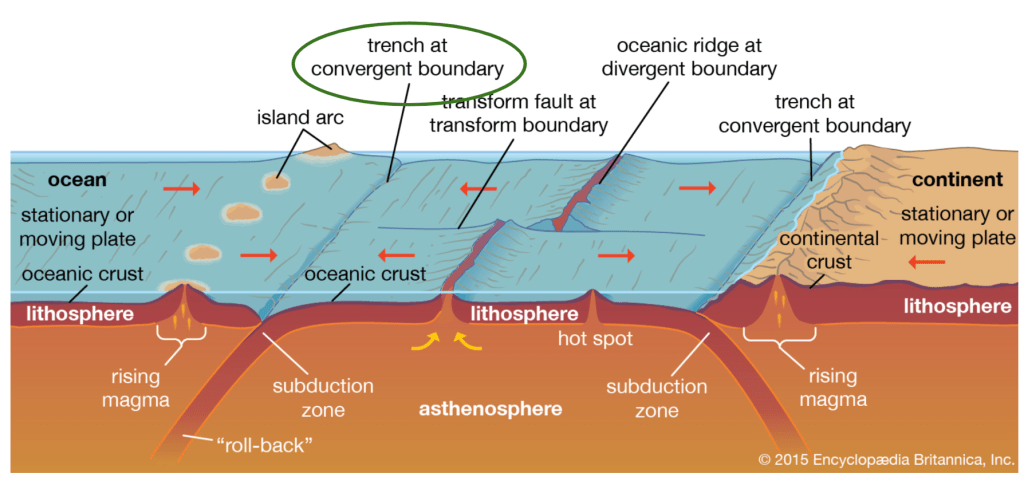
Image Credit britannica.com/science/deep-sea-trench

Image Credit wikipedia.org/wiki/Mariana_Trench
Earthquakes
- britannica.com/science/earthquake-geology
- “Earthquakes are caused by the sudden release of energy within some limited region of the rocks of the Earth.”
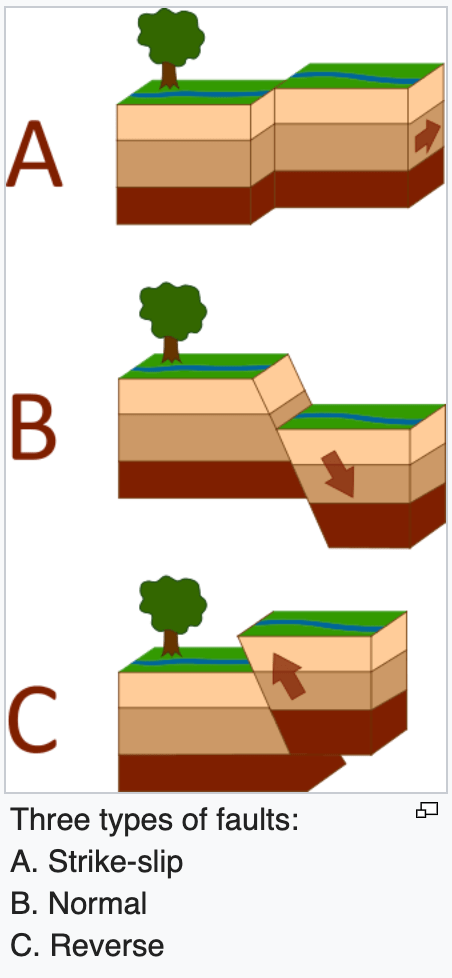
- “A tectonic earthquake occurs when strains in rock masses have accumulated to a point where the resulting stresses exceed the strength of the rocks, and sudden fracturing results. The fractures propagate rapidly through the rock, usually tending in the same direction and sometimes extending many kilometers along a local zone of weakness. In 1906, for instance, the San Andreas Fault slipped along a plane 270 miles long. Along this line the ground was displaced horizontally as much as 20 feet.”

- A strike-slip fault is a vertical fracture where blocks move horizontally.
- A dip-slip fault is an inclined fracture where blocks move vertically.
- In a normal fault the rock mass above the fault slips down
- In a reverse fault the rock mass above the fault is forced up
- A thrust fault is a reverse fault with a dip of 45 degrees or less.
Island Arcs
- An island arc is long chain of oceanic islands
- running along converging tectonic plates
- exhibiting intense volcanic and seismic activity
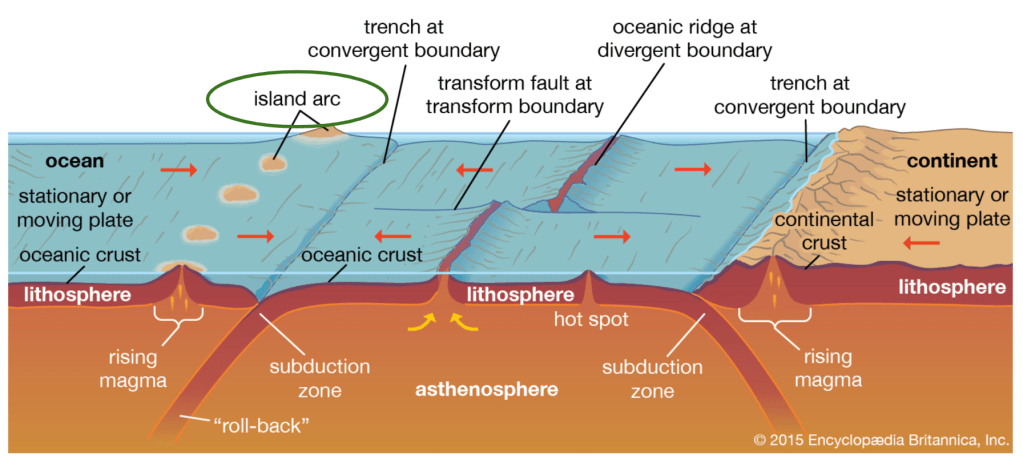
Image Credit britannica.com/science/island-arc
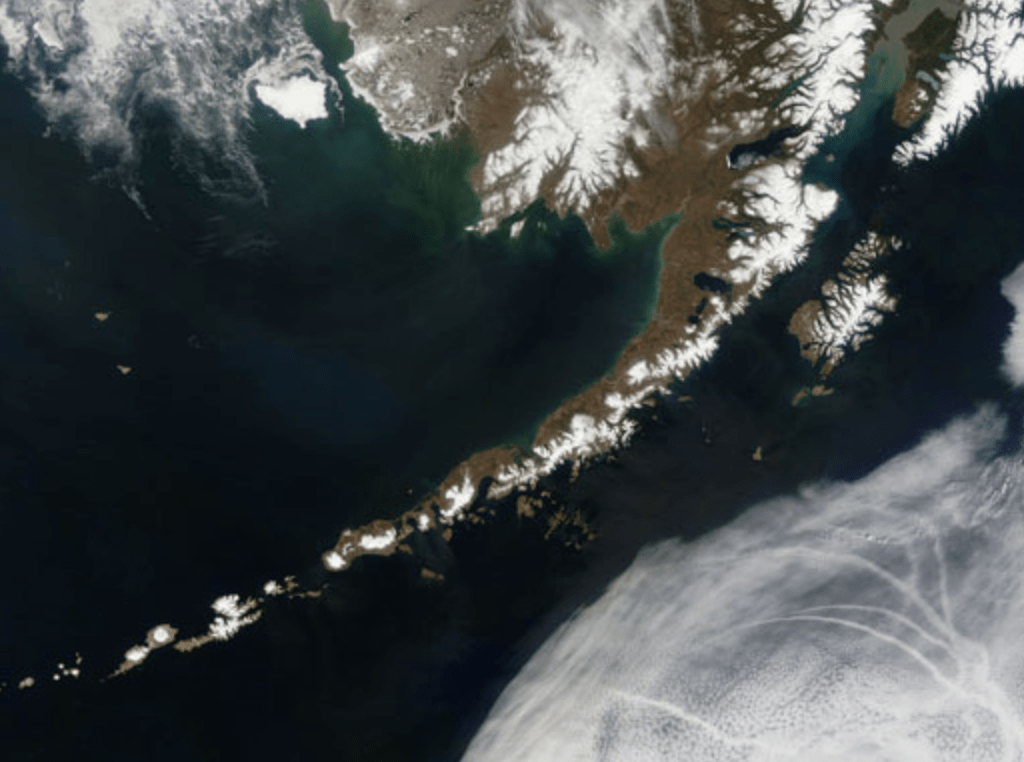
Aleutian Islands

Mountains
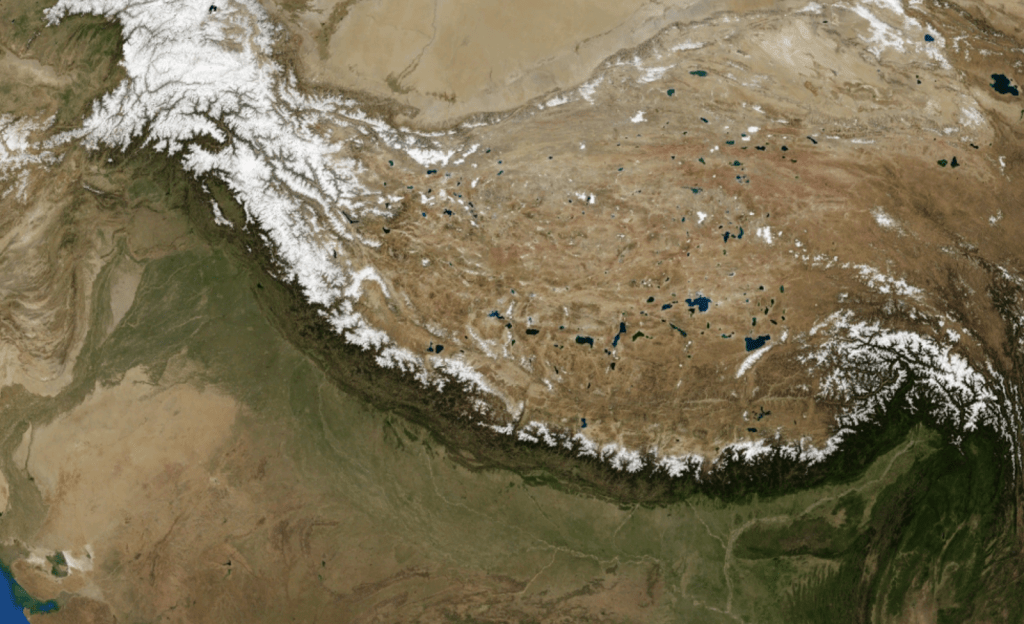
Himalayas
View Video from the Geological Society of London
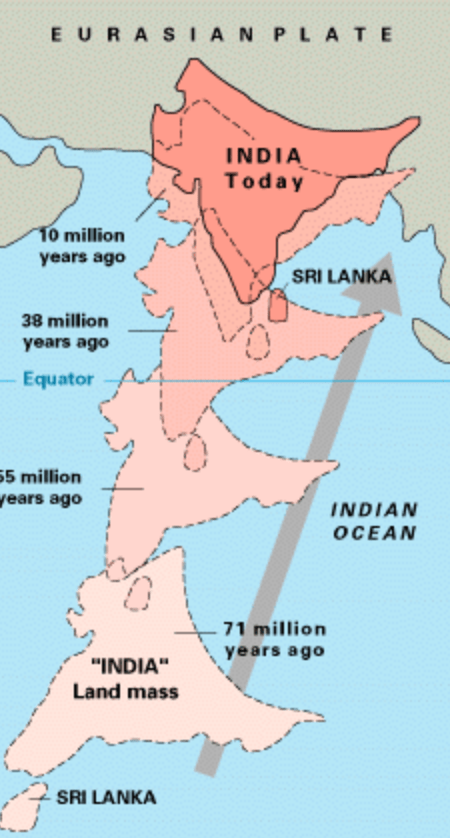
Continental Plates Collides
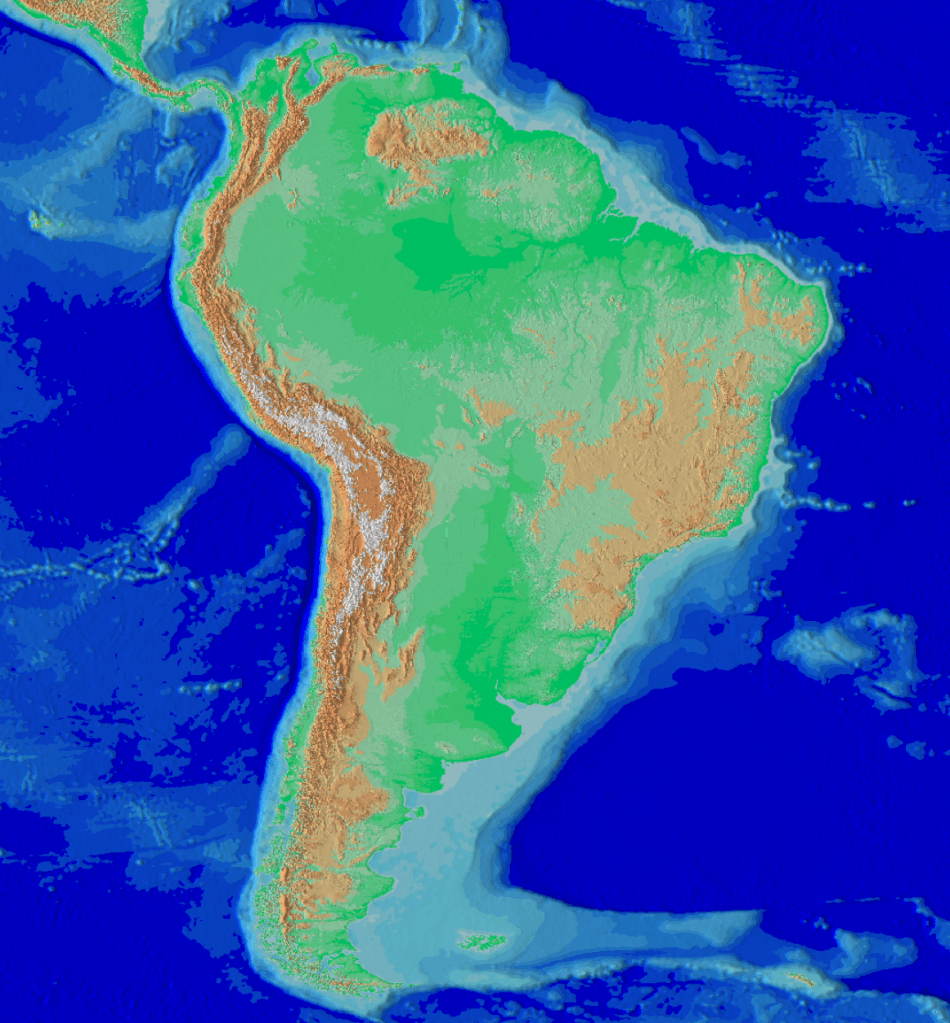
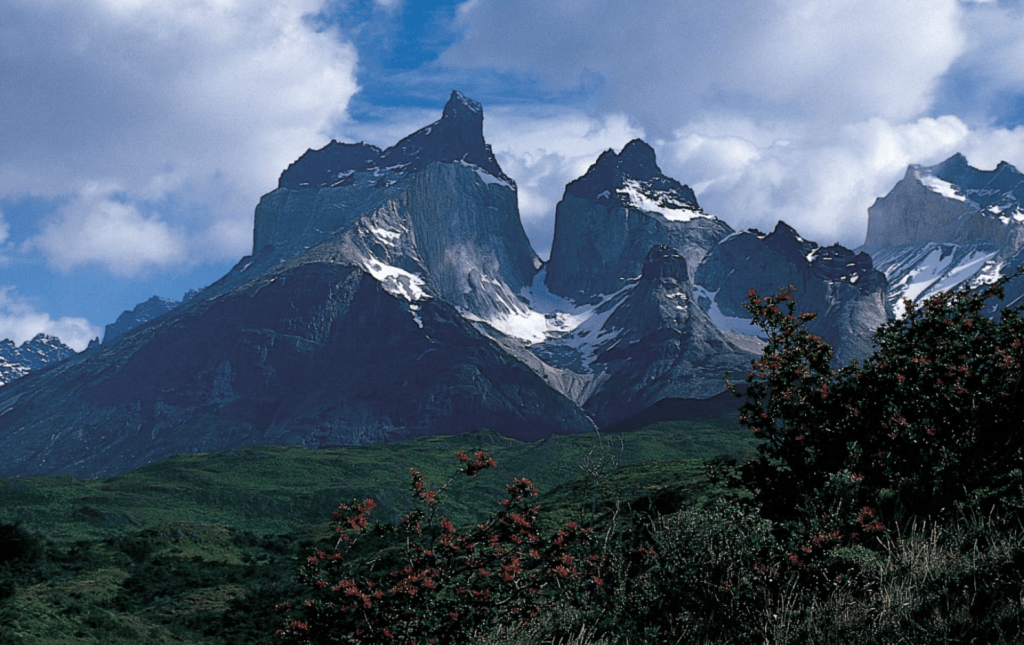
Andes
Oceanic Ridges and Seafloor Spreading
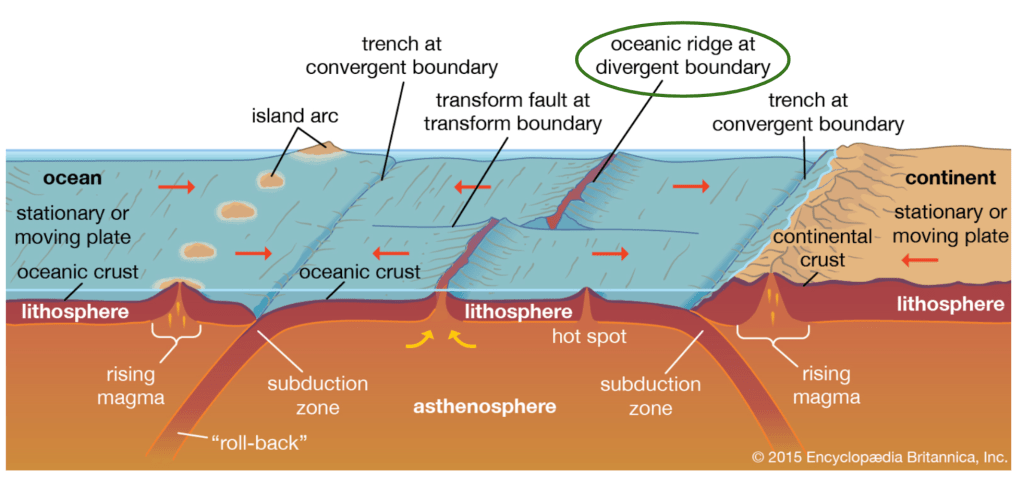
Image Credit britannica.com/science/island-arc

Transform Faults
A transform fault is a strike-slip fault where two tectonic plates slide past each other. The fault ends abruptly at another plate boundary rather than gradually dying out.
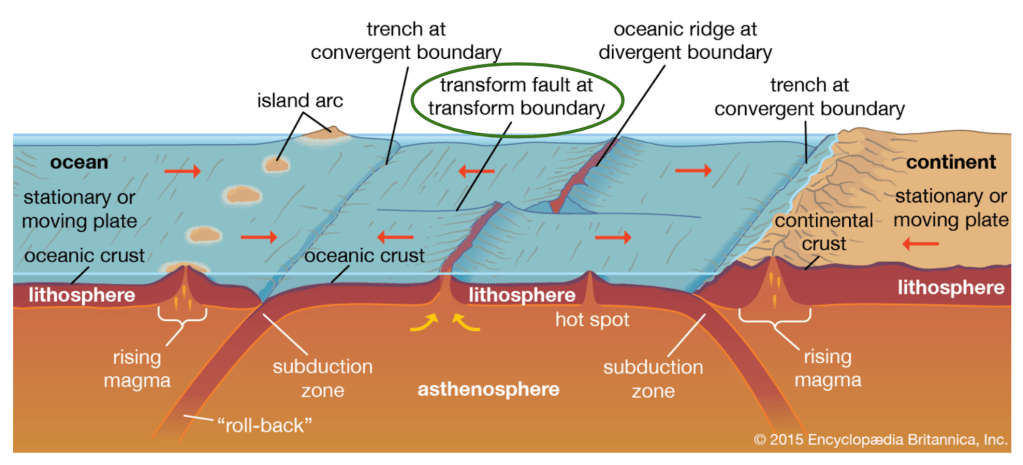
View britannica.com/science/island-arc
San Andreas Fault
- britannica.com/place/San-Andreas-Fault
- “The San Andreas Fault is the transform (strike-slip) boundary between two major plates: the Northern Pacific to the south and west and the North American to the north and east. The Northern Pacific plate is sliding laterally past the North American plate in a northerly direction. The rate of movement has been 4 to 6 cm (1.6 to 2.4 inches) per year since the early 20th century. Parts of the fault line moved as much as 6.4 meters (21 feet) during the 1906 earthquake.”
Volcanoes
- Subduction Volcanoes
- Subduction volcanoes form when an oceanic plate is subducted beneath a continental plate.
- For example, the volcanoes on the western and northern margin of the Pacific Plate: New Zealand, New Guinea, Mariana Islands, Japan.
- Subduction volcanoes form when an oceanic plate is subducted beneath a continental plate.
- Rift Volcanoes
- “Rift volcanoes form when magma rises into the gap between diverging plates.” (britannica.com/science/volcano)
- Most Rift volcanoes are on the ocean floor.
- “Rift volcanoes form when magma rises into the gap between diverging plates.” (britannica.com/science/volcano)
- Hotspot Volcanoes
- Hotspot volcanoes form when heat deep in the Earth rises, melts rock in the tectonic plate above, and the resulting magma burns its way to the surface.
- For example, the Hawaiian volcanoes
- Hotspot volcanoes form when heat deep in the Earth rises, melts rock in the tectonic plate above, and the resulting magma burns its way to the surface.
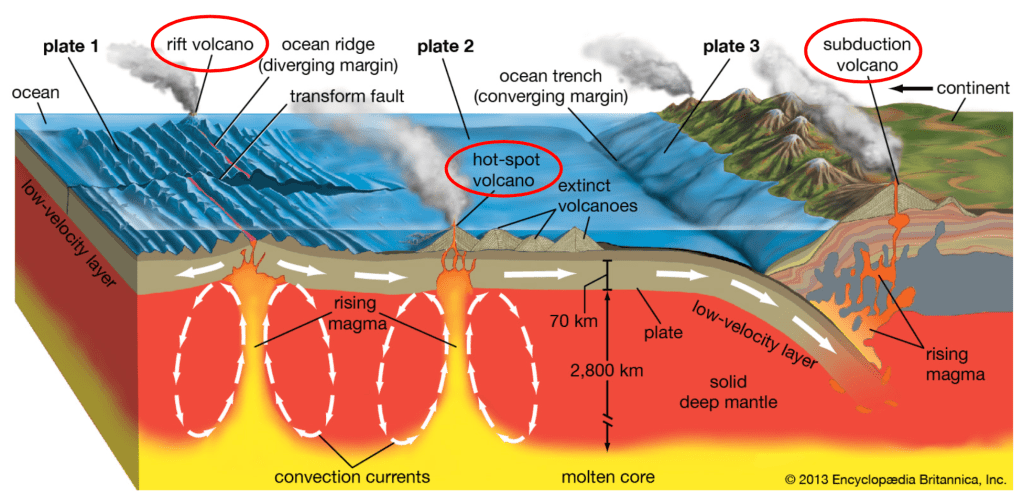
Image Credit britannica.com/science/volcano/images-videos
 A Philosopher's View